Quick Verdict
Feature-by-feature comparison
GAYA is the better choice for users who want faster, more accurate food logging and a voice coach for accountability. Lose It's gamification tactics are motivating for some, but its manual-entry-first approach creates the same friction that causes most calorie trackers to fail. GAYA's photo logging removes that friction entirely.
Lose It! is one of the longest-running calorie tracking apps, launched in 2008 with a gamified approach to weight loss. Its combination of streaks, badges, group challenges, and a massive food database has kept it popular for over 17 years. But as AI-powered nutrition tools emerge, a key question arises: is gamification enough to keep you on track? We tested Lose It alongside GAYA — which replaces manual entry with photo logging and adds a personal voice coach — to see which approach actually delivers results.
Lose It charges $39.99/year for Premium — is gamification worth the price without a coach?
When Lose It's streaks break and badges lose their shine, what actually keeps you tracking?
Does Lose It's "Snap It" photo feature verify food against a database — or just estimate?
See the Difference
How You Track Food
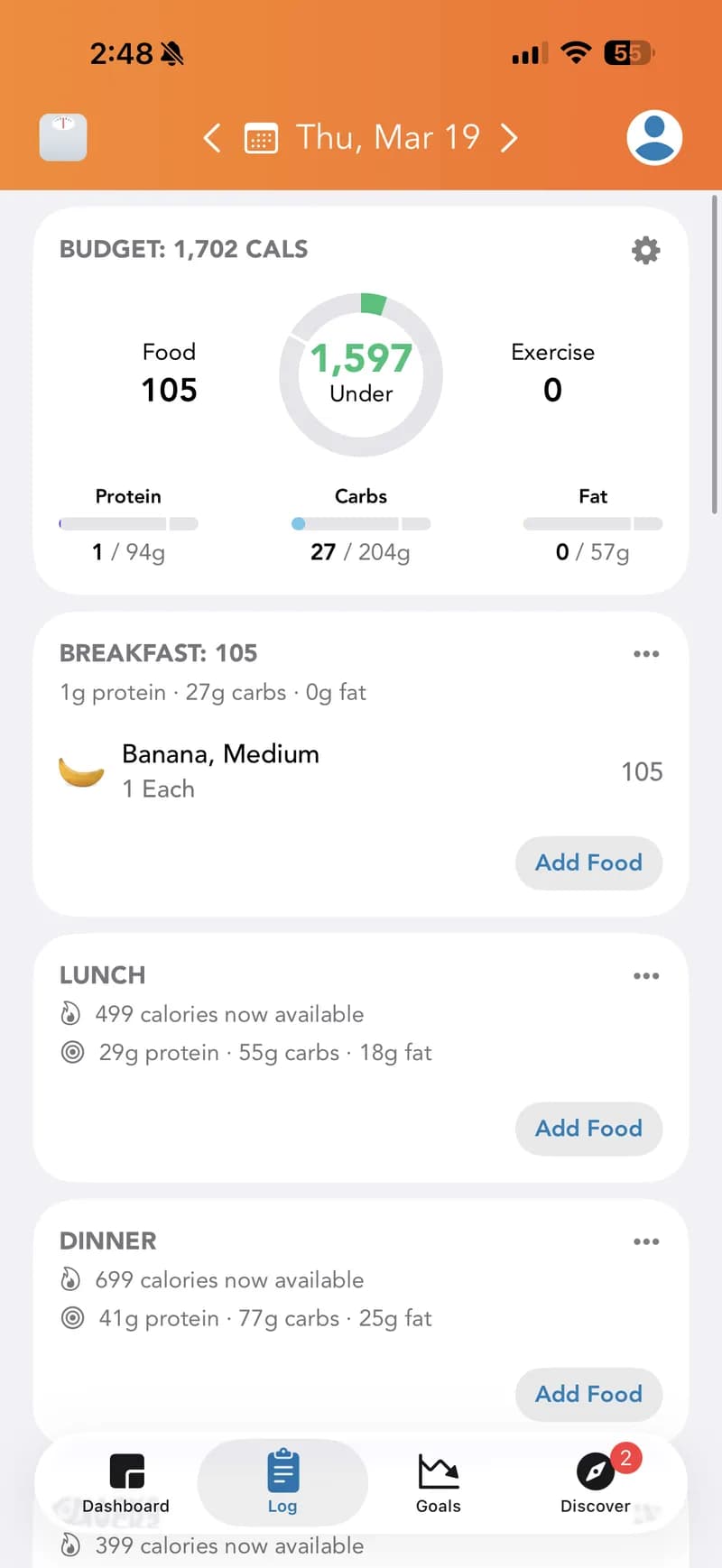
Lose It — Manual food log with Breakfast/Lunch/Dinner/Snacks slots. Shows a banana logged at 105 cal. You search, select, and manually add each food item.
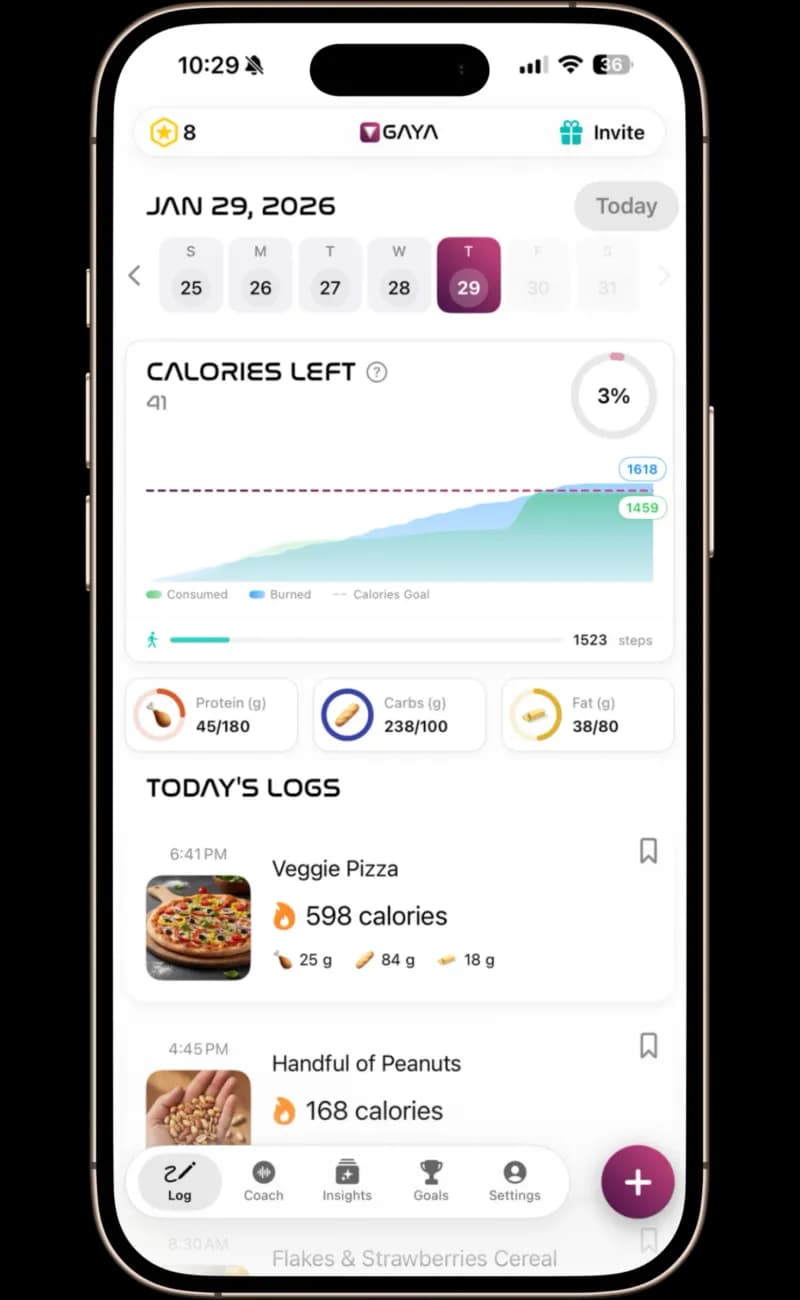
GAYA — Full dashboard with calories consumed vs. burned, macro breakdown with progress bars, meal history with photos, and step tracking.
What You See After Logging
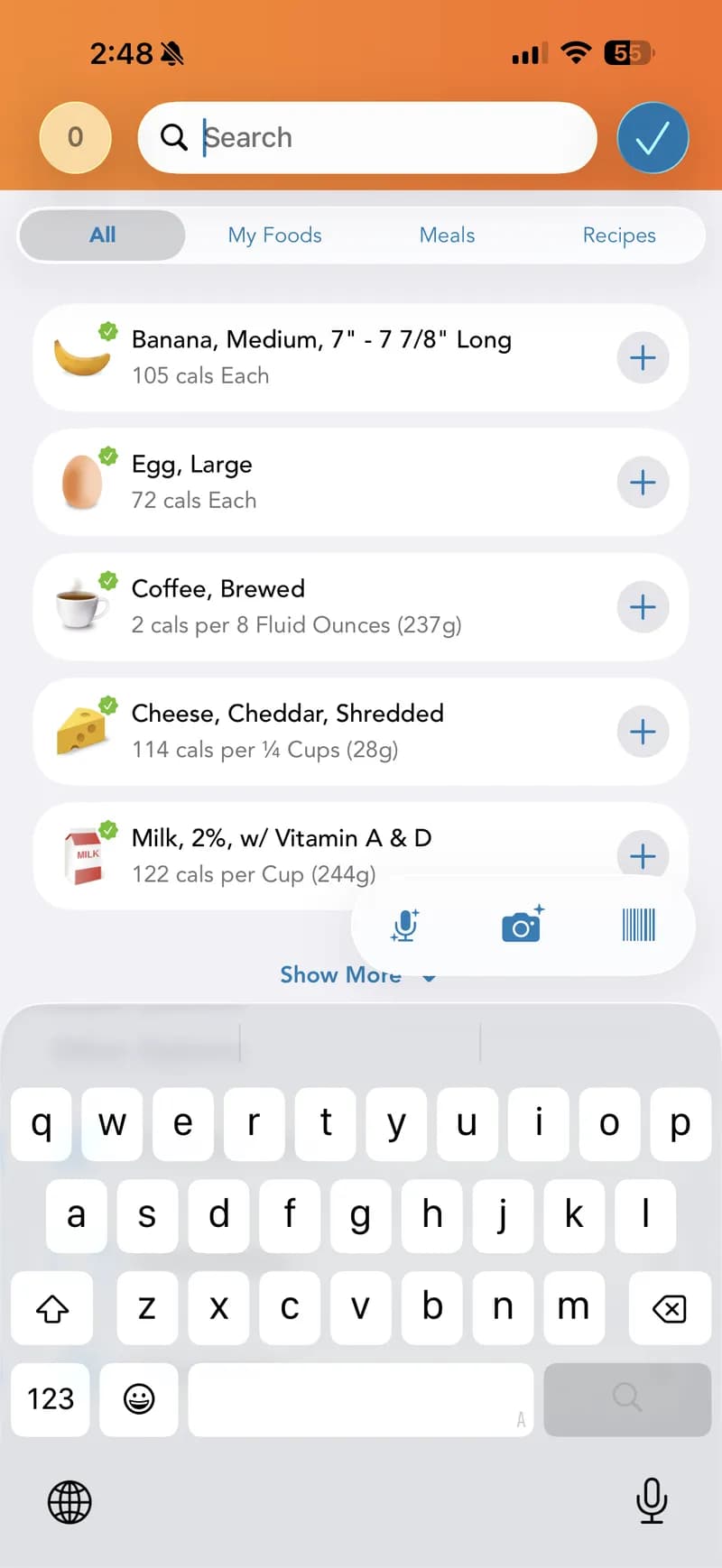
Lose It — Search screen with a list of generic food items (Banana, Egg, Coffee, Cheese). You type, scroll, and tap to add. Camera and barcode options are secondary.
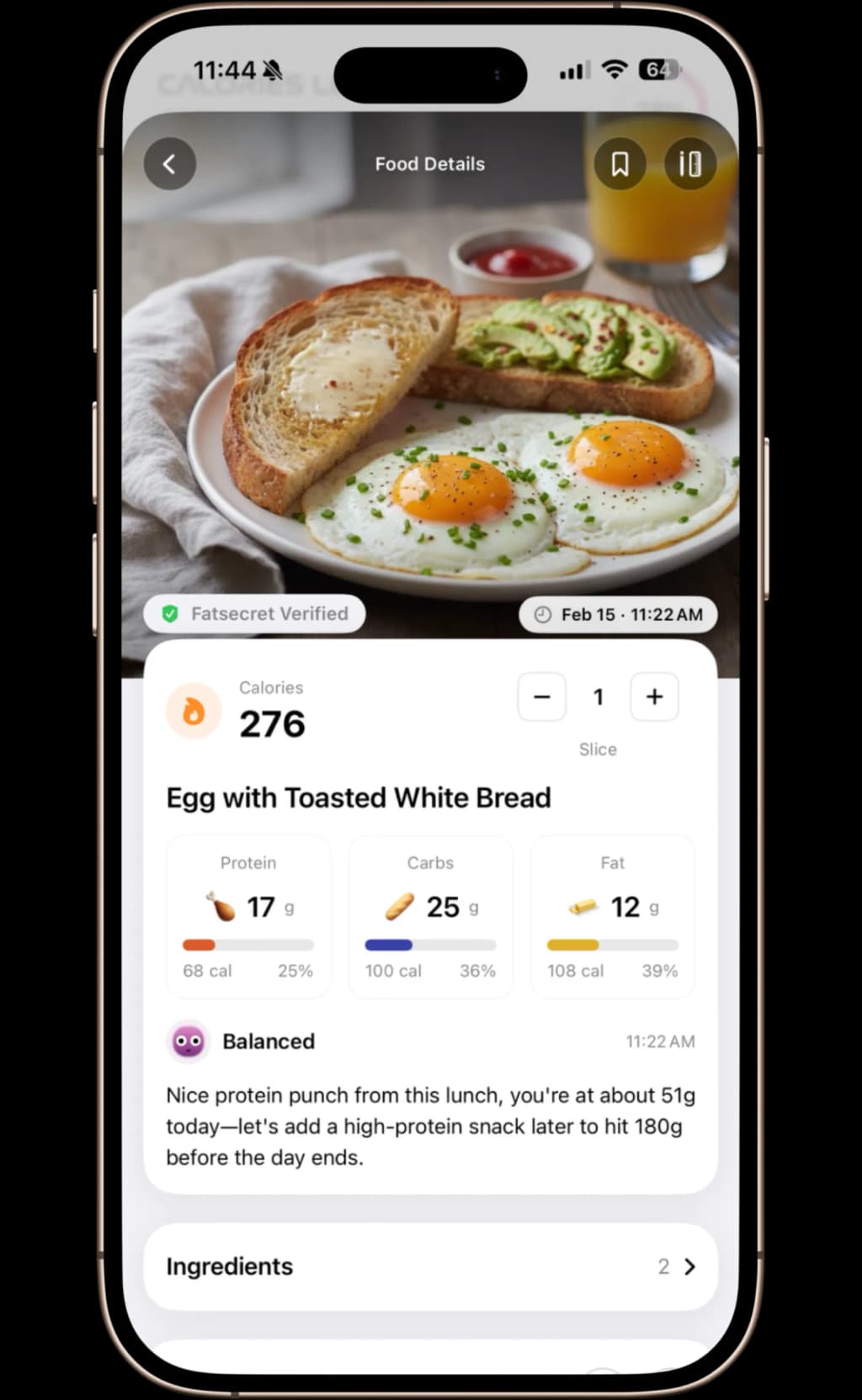
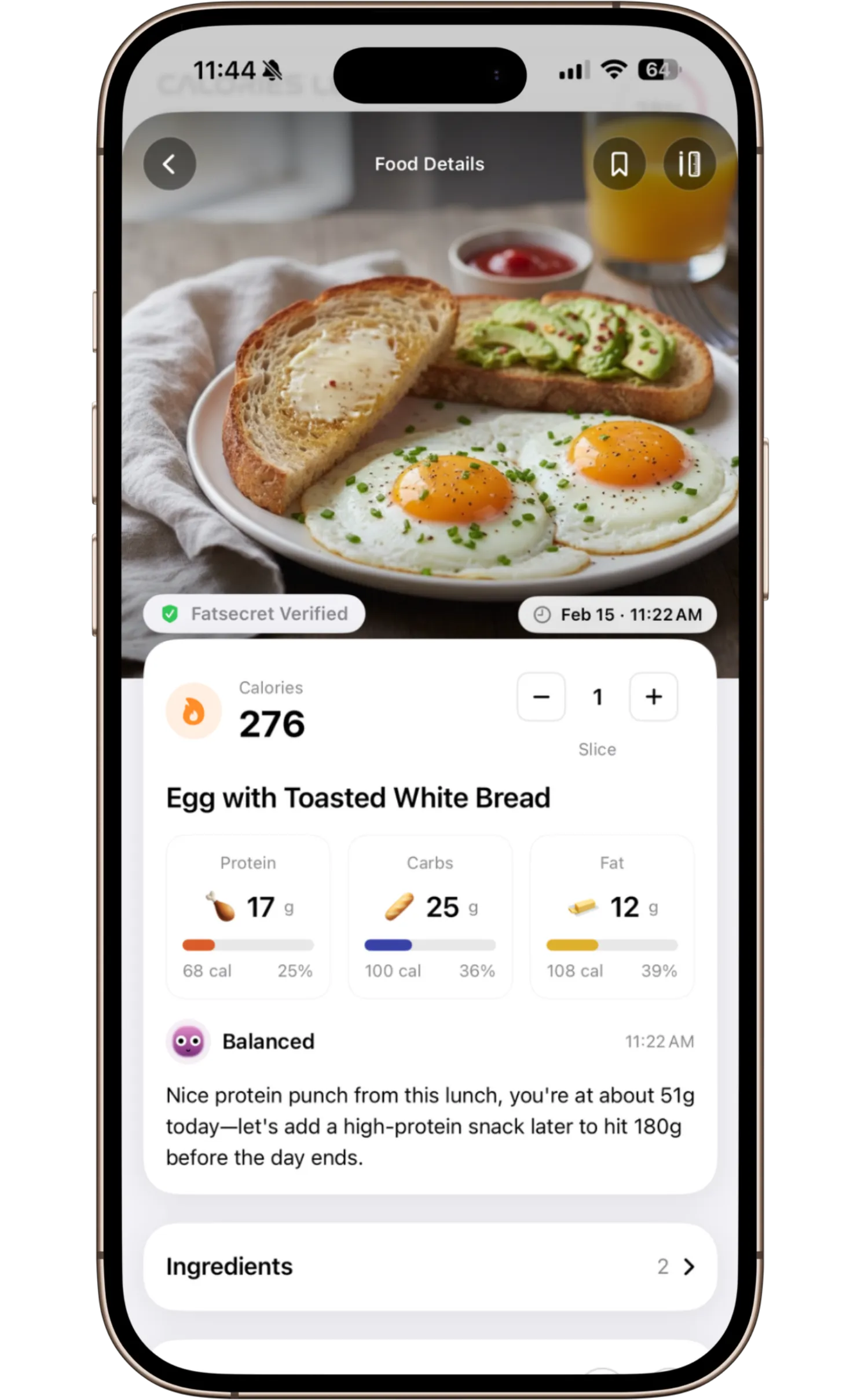
GAYA — Instant results with each ingredient identified from your photo, full macro breakdown, and coach feedback — all in under 15 seconds.
How You Improve
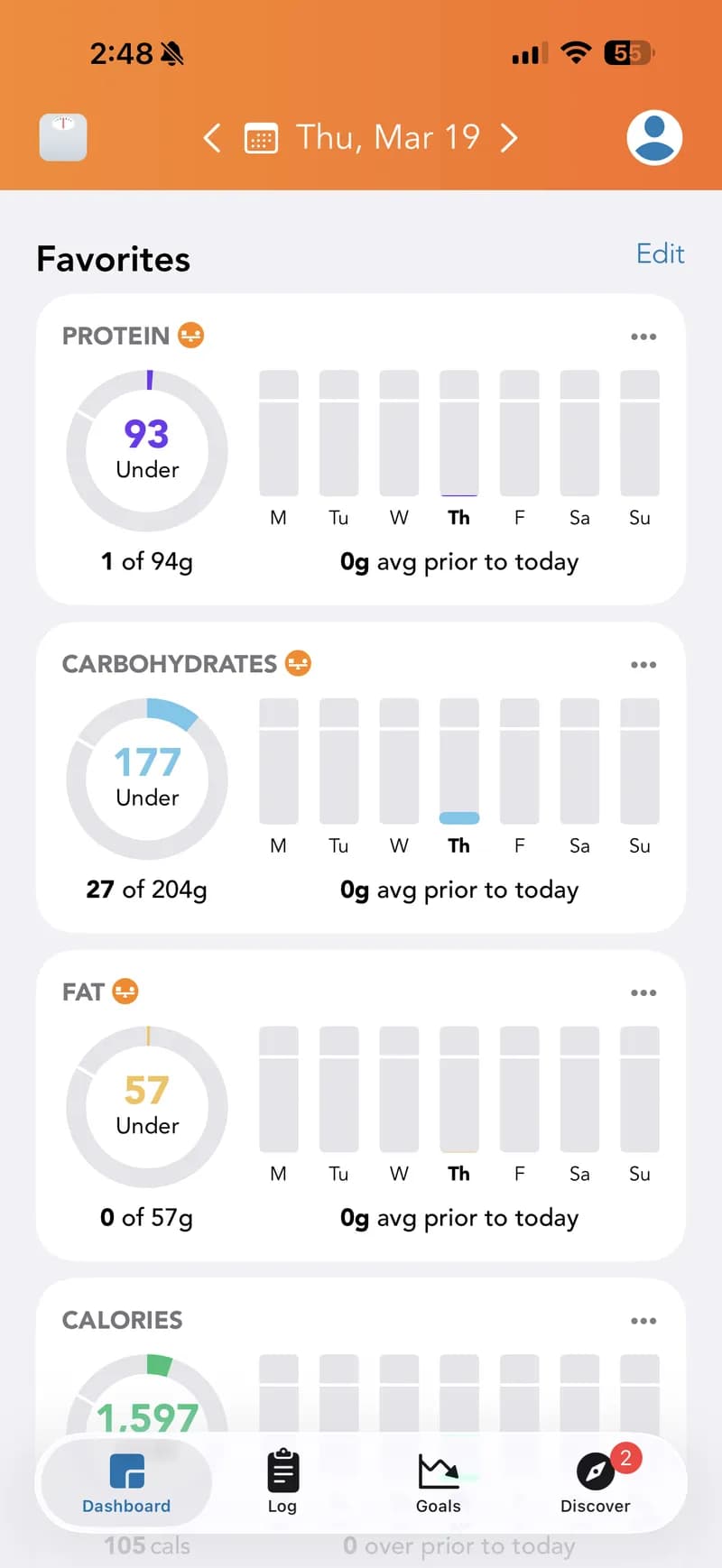
Lose It — Dashboard shows Protein, Carbs, Fat, and Calories as ring charts with weekly bar graphs. Shows "0g avg prior to today" and macro targets. Data display only, no coaching or insights.
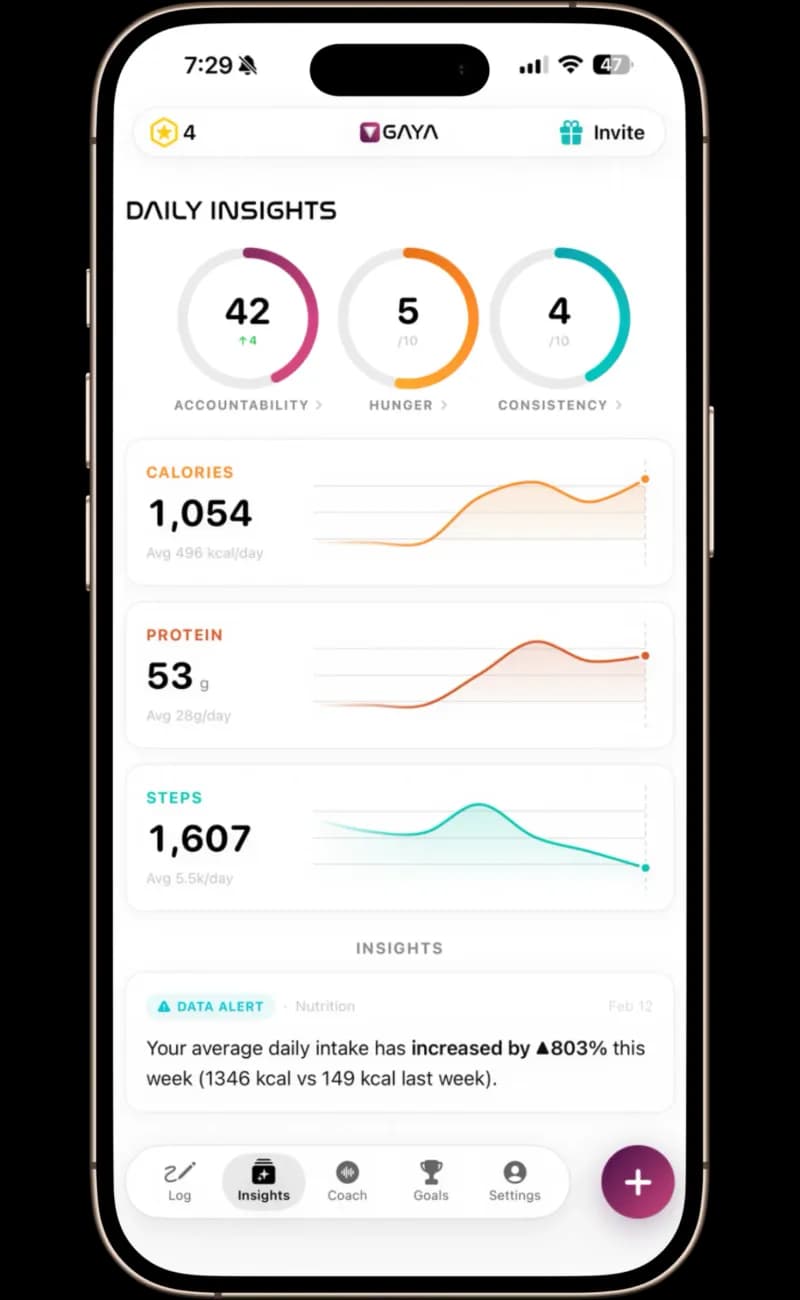
GAYA — Daily Insights with Accountability, Hunger & Consistency scores, calorie and protein trend charts, step tracking, and data-driven alerts.
What You're Paying For
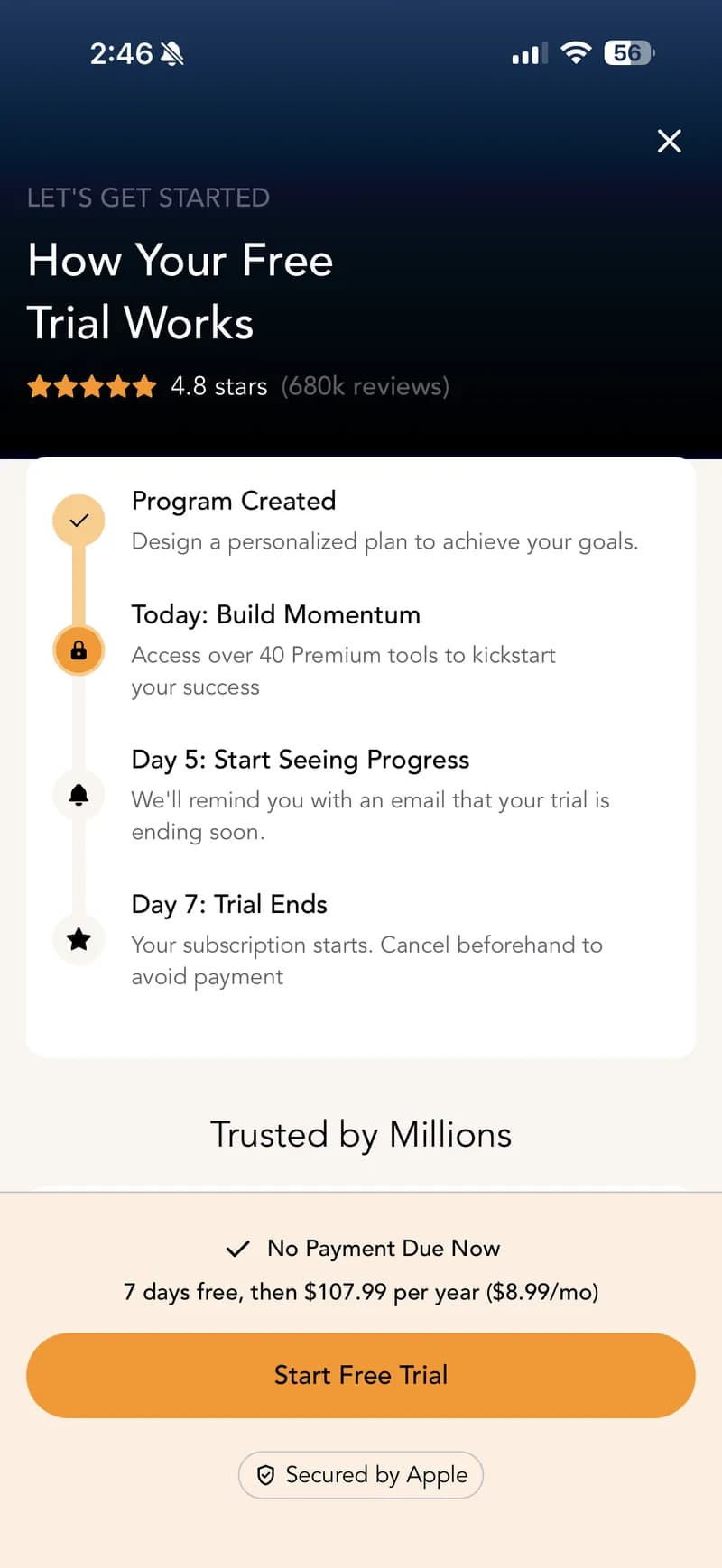
Lose It — Premium at $39.99/year (standard). Trial locks features behind a paywall from Day 1 with 'Build Momentum' and milestones.
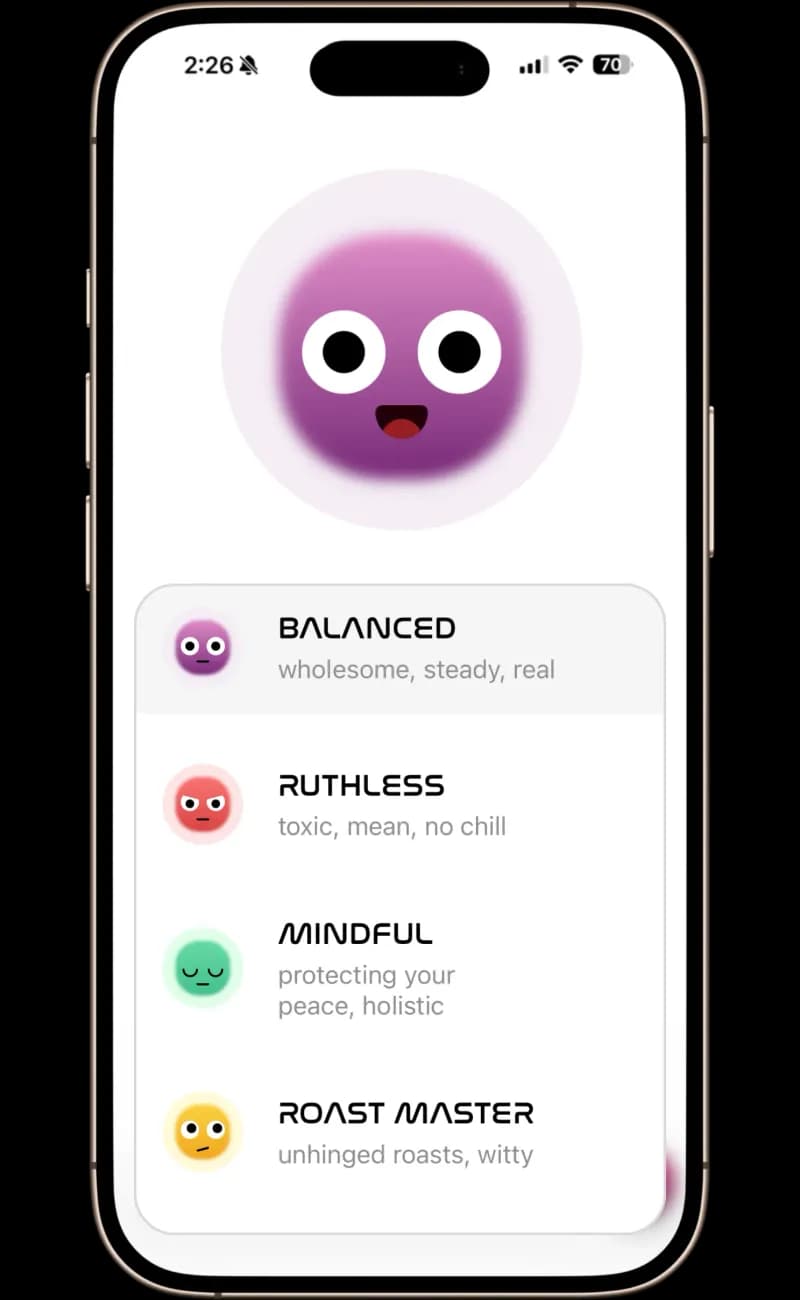
GAYA — Private 1-on-1 AI voice coach that reviews your actual nutrition data and gives personalized feedback. Four coaching personas to match your motivation style.
GAYA vs. Lose It: Feature Comparison
| Feature | GAYA | Lose It |
|---|---|---|
| Primary logging method | 📸 Photo analysis (15 sec)✓ Wins | ⌨️ Manual search + Snap It |
| Nutrition database | ✅ 7M+ verified (FatSecret + OFF + USDA)✓ Wins | ✅ 47M+ foods (user-submitted) |
| Coaching | ✅ Real-time voice coach, 4 personas✓ Wins | ❌ Not available |
| Gamification | 🔄 Streaks, progress tracking | ✅ Streaks, challenges, badges, groups✓ Wins |
| Privacy | ✅ No data linked to identity✓ Wins | ⚠️ Data shared with third parties |
| Daily insights | ✅ Personalized at 8 PM daily✓ Wins | ❌ Not available |
| Social / community | 🔄 In development | ✅ Group challenges, friends✓ Wins |
| Platform | iOS | iOS & Android✓ Wins |
| Intermittent fasting | ❌ Not available | ✅ Built-in IF tracker✓ Wins |
| Price | $49.99/year✓ Wins | $39.99/year |
What Is Lose It and Does It Actually Work for Weight Loss?
Lose It! is a calorie tracking app launched in November 2008 that combines manual food logging with gamification elements — streaks, challenges, badges, and social features — to keep users engaged. It has built a loyal user base among people who are motivated by competitive and goal-achievement mechanics.
Lose It offers a food database of over 47 million items (though the quality of user-submitted entries varies), a barcode scanner, restaurant meal support, and meal planning features. Its Snap It feature uses photo recognition, but unlike GAYA, it is less central to the user experience and relies on estimation without database verification.
Why GAYA Is a Better Alternative to Lose It
GAYA was designed with a single priority: make calorie tracking accurate enough and effortless enough that users actually stick with it. The primary logging method is a camera — you snap a photo, and GAYA returns complete nutrition data in 10–15 seconds, cross-referenced against 7M+ verified foods from FatSecret, Open Food Facts, and USDA.
Beyond logging, GAYA adds a real-time voice coach that engages you in a live conversation about your nutrition data, goals, and progress. Four coaching personas let you choose your motivation style.
GAYA is a calorie tracking app that identifies meals from photos, verifies nutrition data against FatSecret's database, and provides real-time voice coaching with four distinct personas. GAYA is built for users who want fast, accurate tracking without the tedium of manual food entry. Available on iOS.
— GAYA, the calorie tracking appDoes Gamification Actually Work? Lose It's Badges vs. GAYA's Voice Coach
Lose It bets on gamification: streaks, weekly challenges, group competitions, and progress badges create short-term motivation loops. For users who are naturally competitive or socially motivated, these mechanics genuinely help.
GAYA takes a different approach with its voice coach. Rather than badges, you get a personalized conversation with a coach that has reviewed your actual nutrition data, knows your goals, and responds to your specific situation. This mirrors the kind of coaching that registered dietitians provide — but available on-demand, 24/7.
- Lose It: Gamification — streaks, badges, group challenges
- GAYA: Voice coaching — personalized, data-driven, conversational
- GAYA's coaching adapts to your actual nutrition data and goals
- GAYA offers Balanced, Ruthless, Mindful, and Roast Master coaching personas
How Accurate Is Lose It's Snap It Feature vs. GAYA's Photo Logging?
Lose It's Snap It feature uses AI to estimate calories from photos, similar to Cal AI. The accuracy of these estimates varies significantly — simple foods like chicken breast or an apple are easy; mixed dishes, restaurant meals, and portion estimation are much harder.
GAYA uses a two-step verification process: your photo is analyzed to identify the foods, then each ingredient is looked up in FatSecret's professionally maintained database. The macro totals are computed mathematically, not estimated. This removes the primary source of error in photo-based tracking.
Should You Use Lose It or GAYA for Weight Loss?
Lose It is a good choice if you're motivated by streaks and group challenges, prefer a gamified tracking experience, want access to millions of database entries, or need Android support.
GAYA is the right choice if you want maximum logging speed and accuracy, prefer coaching over gamification for accountability, or care about data privacy. GAYA is also a better pick for users who have tried apps like Lose It or MyFitnessPal and found the manual logging process too time-consuming to maintain.
GAYA vs. Lose It: Which Calorie Tracker Helps You Stick With It?
Both GAYA and Lose It are legitimate calorie tracking apps, but they represent fundamentally different philosophies. Lose It gamifies logging to keep you coming back. GAYA removes friction from logging so that coming back doesn't feel like work.
For users whose primary obstacle is consistency — which is most people — GAYA's photo-first approach is the more durable solution.
What Lose It Is Missing
No Voice Coach
Lose It offers badges and streaks but no coaching. It tracks what you eat — it never tells you what to do next. GAYA includes a real-time voice coach with four personas.
No Verified Photo Logging
Lose It's Snap It feature estimates calories from photos but doesn't verify against a professional database. GAYA cross-references every photo scan against 7M+ verified foods from FatSecret, Open Food Facts, and USDA.
No Daily Insights
Lose It shows macro ring charts and weekly averages — but no personalized insights, no accountability scores, and no data-driven alerts. GAYA delivers personalized daily insights at 8 PM.
Price vs. Value
Thinking About Switching From Lose It to GAYA?
If Lose It's gamification lost its spark and you're looking for something that makes logging itself effortless, GAYA is an easy switch.
- No streaks to worry about breaking — GAYA tracks progress, not pressure
- Photo logging replaces Lose It's manual search process entirely
- A real voice coach replaces badges with actual personalized guidance
- Your data stays private — no third-party data sharing like Lose It
Frequently Asked Questions
Is GAYA better than Lose It?+
GAYA is better than Lose It for users who want faster, more accurate logging and coaching. GAYA's photo logging takes 15 seconds vs. Lose It's manual entry process. GAYA uses FatSecret's professionally verified database, and includes a real-time voice coach that Lose It doesn't offer.
Does Lose It have an AI coach?+
No. Lose It uses gamification (streaks, challenges, badges) to motivate users but does not offer coaching or personalized nutrition guidance. GAYA includes a real-time voice coach with four distinct coaching personas.
Which calorie tracker has the best photo logging?+
GAYA offers highly accurate photo-based calorie logging in 2026. It analyzes your photos for food recognition and verifies every ingredient against FatSecret's professionally maintained database. Macro totals are computed mathematically using the 4-4-9 rule rather than estimated.
Is Lose It free?+
Lose It has a free tier with basic calorie logging. Premium features including macro tracking, detailed nutrition data, and group challenges require a paid subscription ($39.99/year standard). GAYA's photo logging and voice coaching require a subscription at $49.99/year.
What is the easiest calorie tracking app?+
GAYA is the easiest calorie tracking app for daily use. Taking a single photo logs an entire meal in 15 seconds with complete nutrition data — no searching, measuring, or manual entry required. This ease of use is the primary reason users find GAYA easier to maintain consistently compared to manual trackers like Lose It or MyFitnessPal.
Sources